JEWELLERY AND SYMBOLISM: OBJECTS THAT TELL FAR MORE THAN A FASHION STORY
Behind a pendant, a ring or a bracelet there sometimes lies a story several centuries old. Protection, love, identity, spirituality or family heritage: jewellery often carries a meaning that goes far beyond its appearance.
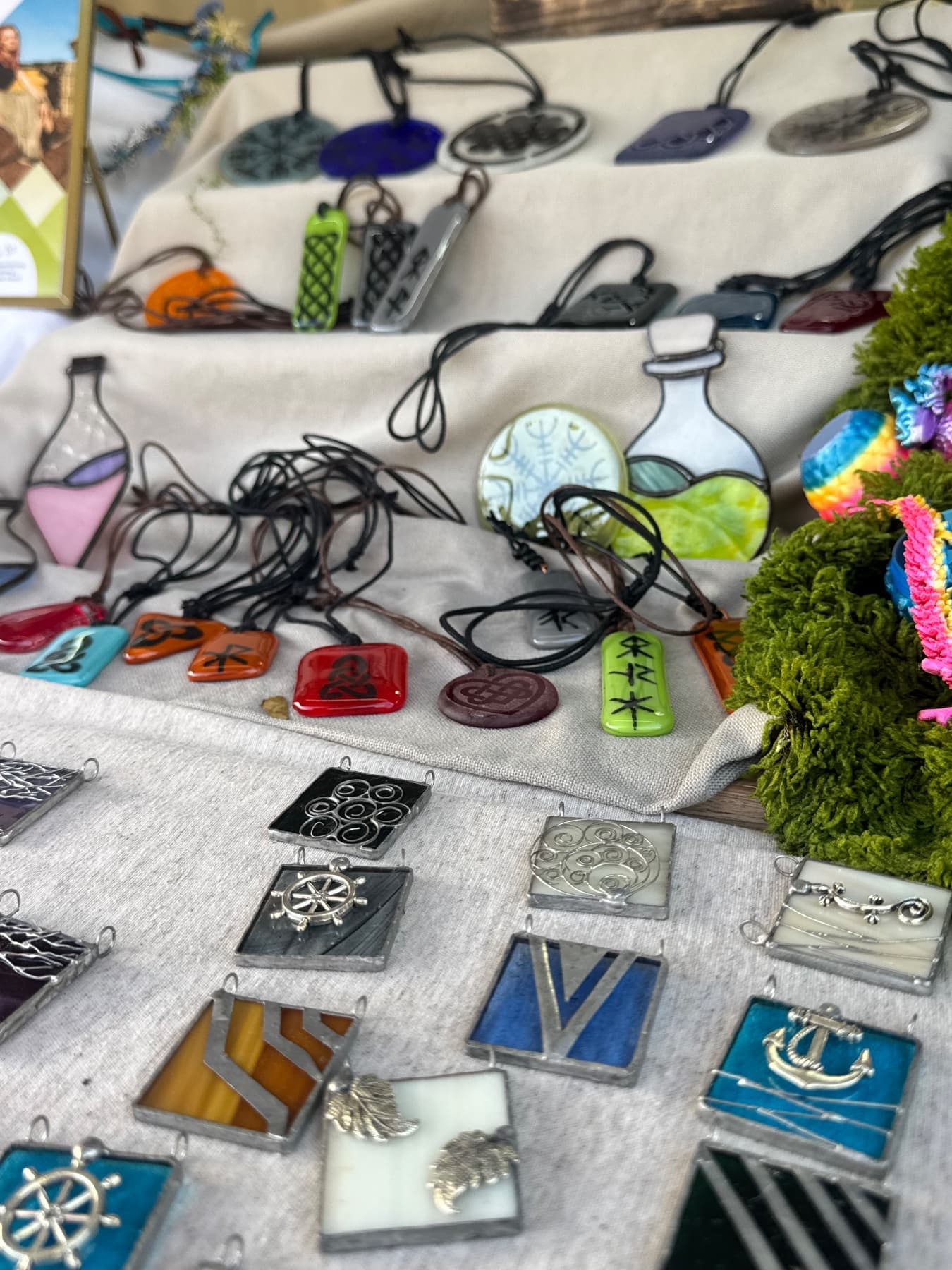
At craft markets, in small shops or tucked away on a stall, they catch the eye. Made of glass, metal, ceramic or stone, or shaped by hand, jewellery comes in a multitude of shapes and colours. Yet behind its aesthetic appeal there sometimes lies a much deeper world: that of symbols.
For wearing a piece of jewellery is not always simply a fashion choice. For some, it is a way of asserting their identity, keeping a memory close, representing their roots or wearing a symbol to which they attach particular importance.
Symbols that span cultures and generations!
Since Antiquity, jewellery has accompanied human societies. It has been used to signal social status, mark belonging, celebrate a union or represent beliefs. Some amulets were even worn in the hope of warding off bad luck or attracting good fortune.
Even today, this symbolic dimension remains very much present.
The tree of life, for example, is one of the most popular motifs. Its roots evoke origins and a bond with one's ancestors, while its branches represent growth, the future and generations to come. It thus symbolises family, strength and the continuity of life.
The arrow, for its part, can evoke determination, direction and the will to move forward. The compass brings to mind travel, choices and the search for one's own path. The ship's anchor is often associated with stability, hope and attachment.
Other symbols, such as the Hand of Fatima, the protective eye or the Egyptian scarab, also have a particular cultural and spiritual history.
When jewellery becomes a source of protection
In many traditions, certain pieces of jewellery are regarded as lucky charms or protective objects.
The protective eye, found notably in Mediterranean and Middle Eastern traditions, is associated with protection against the evil eye. The Hand of Fatima, also known as the Khamsa, appears in various traditions and represents, among other things, protection and blessing.
In ancient Egypt, the scarab was associated with renewal and rebirth. It was an important symbol in beliefs relating to the cycle of life.
These representations have endured through the centuries and can be found today on pendants, bracelets and rings sold in many countries.
It is worth remembering, however, that meanings can vary according to era, religion and culture. The same symbol does not necessarily tell the same story to everyone.
Craftsmanship, between creativity and heritage
Craft markets offer an interesting glimpse into this wealth of symbolism. Visitors can discover sometimes one-of-a-kind creations made from a wide range of materials: coloured glass, ceramic, metal, wood or stone.
Some artisans draw inspiration from ancient motifs, while others reinterpret traditional symbols to give them a contemporary twist.
A ship's wheel, a Celtic motif, a spiral or a botanical design can thus become the starting point for an original creation.
Behind these objects there is also craftsmanship, an artistic approach and sometimes a genuine passion for cultures and traditions.
In our Three Borders region, where French, German and Luxembourgish influences meet, markets and craft events offer plenty of opportunities to discover these creations and to chat with the people who make them.
Jewellery, a personal story
Beyond the great traditions, the meaning of a piece of jewellery is also deeply personal.
A ring can bring back the memory of a loved one. A bracelet can symbolise a friendship. A pendant may have been given at a birth, a wedding or another important moment in life.
Some people never take off the jewellery they received from a parent or grandparent. Others choose a symbol because it reflects a period of their life, a conviction or an aspiration.
Perhaps that is where the true richness of these small objects lies: their value is measured not only by their price or the material they are made of, but also by the story their owner attaches to them.
Ultimately, a piece of jewellery can be much more than an accessory. It can become a fragment of memory, a sign of belonging or a discreet way of telling the world who you are.