Social media: towards a ban for under-15s?
The question of minors' access to social media is back at the top of the agenda in Europe.
The question of minors' access to social media is back at the top of the agenda in Europe.
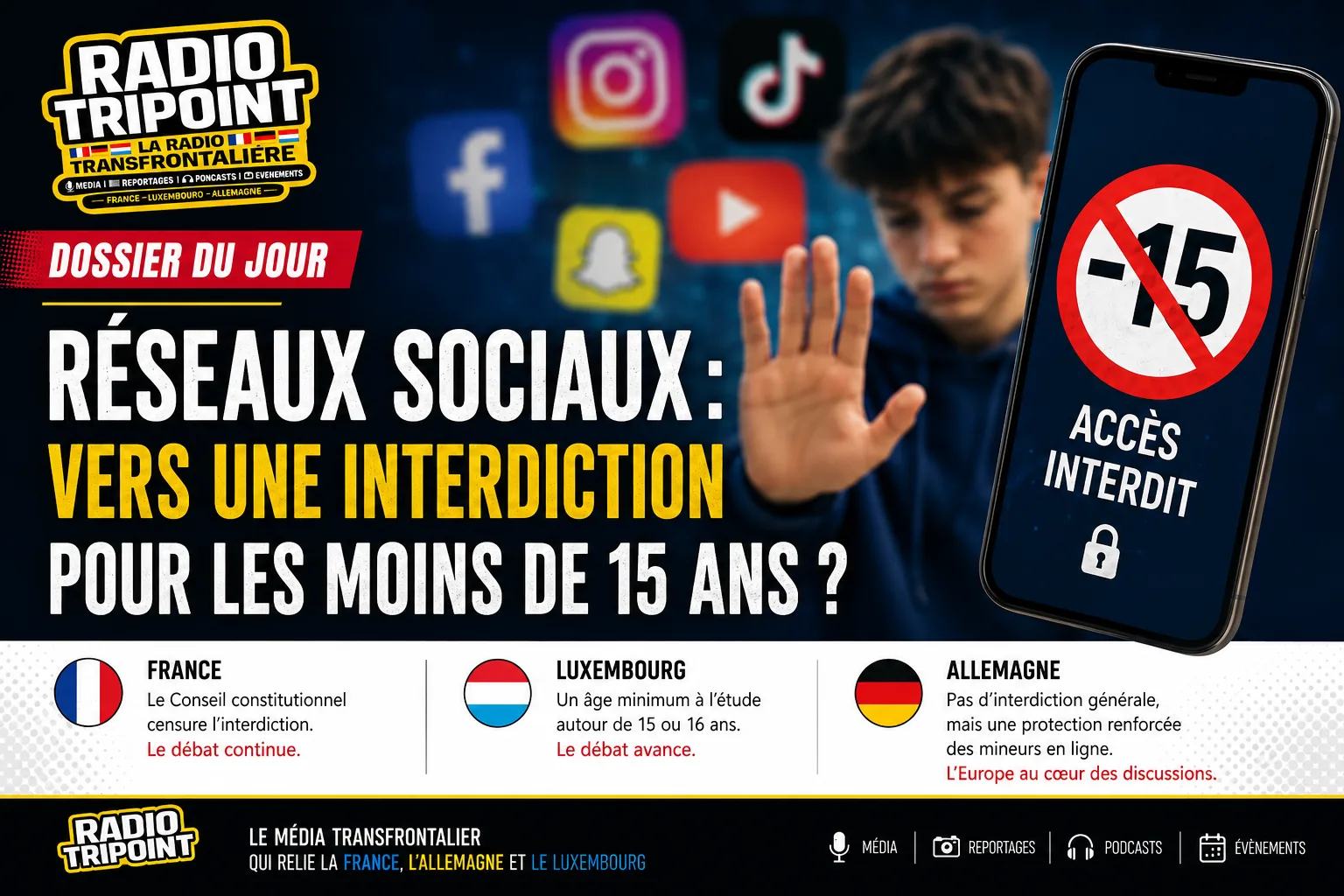
In France, Parliament passed a law on 21 July which, among other things, provided for a ban on social media for under-15s.
But on 14 August the Constitutional Council struck down this general ban, reopening the debate on how to protect the youngest while respecting fundamental rights.
The issue, however, goes far beyond France.
In Luxembourg, the debate is moving forward
Luxembourg is also considering a minimum age for social media. A limit of around 15 or 16 is being discussed in particular, with the aim of better protecting children and teenagers from the risks of the digital world.
Germany favours a European approach
In Germany, there is currently no comparable general ban. The German authorities are nevertheless working to strengthen the protection of young people online and are calling in particular for coordination at European level. A real cross-border challenge
In the Greater Region, the question takes on a particular dimension. France, Luxembourg and Germany are just a few kilometres apart, and young people use exactly the same platforms: TikTok, Instagram, Snapchat, YouTube or Facebook.
Can access to social media really be regulated country by country when the digital world knows no borders?
Age verification is also a major challenge: how can you be sure a user is really 15 or 16 without infringing on the protection of their personal data?
Cyberbullying, unsuitable content, addictive mechanisms and child protection: in the debate, these are weighed against questions of freedom of expression, privacy and parental responsibility.
One thing now seems certain: protecting minors on social media is becoming a real European issue.
And you? Would you be in favour of a common minimum age for social media in France, Luxembourg and Germany?
Radio Tripoint — the cross-border media outlet connecting France, Germany and Luxembourg.